
You Are Being Robbed
The work-session is how you steal it back

My dad is severely addicted to his phone. He’d never admit it. But I’ve watched him pick it up and put it down more times than he’s looked his children in the eye (except of course for the grandchildren my sisters have bestowed upon my parents). Facebook’s algorithm has gotten very good at this.
If an alien species came to earth and only had my dad to make inferences about humanity, they’d conclude that a superior species in the form of a glowing brick had enslaved us.
Even as I’m writing this in a cafe, I can see people getting dopamine-punched every 90 seconds when the telepathic siren-call of their phone goes off. Looking up from their laptops, checking their phone, hot-potatoing through every app, putting it down, picking it up again - oeh, what is this? Another hot potato.
Cal Newport, the author of Deep Work, believes one of the biggest competitive advantages you can have in the coming years is the ability to sit down and do deep, focused work.
Easier said than done with fresh “hits” just a button-click away. Now more than ever we are being robbed of our attention.
One way to cure this is to lock your phone in a kitchen safe for two hours. Another is to build the willpower to sit down and do the work.
But what I want to talk about is activation energy. The bottleneck isn’t willpower. It’s activation energy. How hard it is to start.
Most of us try to optimise with productivity apps, timers, cold showers, journaling routines. My approach is embarrassingly simple.
Restrict yourself to the confines of a meeting.
I stumbled onto this while trying to stop losing track of what I was working on. I started with what I call “logs” - a timestamp on my daily note with a bit of information about what I was working on.
Sometimes the log got long enough that I turned it into its own meeting - a work-session. Every work-session ties to a project, which makes everything easy to find. But something else started happening after a few weeks of working this way.
Four benefits I didn’t expect.
You never start from zero
I have a briefing command built into my setup that looks at the project, the previous work-sessions, outstanding tasks, and what my next steps are - and gives me a summary of my progress so far.
I don’t need to start from a blank screen anymore. I don’t have to go back through previous sessions to extract what I’ve done or what I need to do next. My AI assistant does it for me.
Never. Starting. From. Zero.
Four walls go up
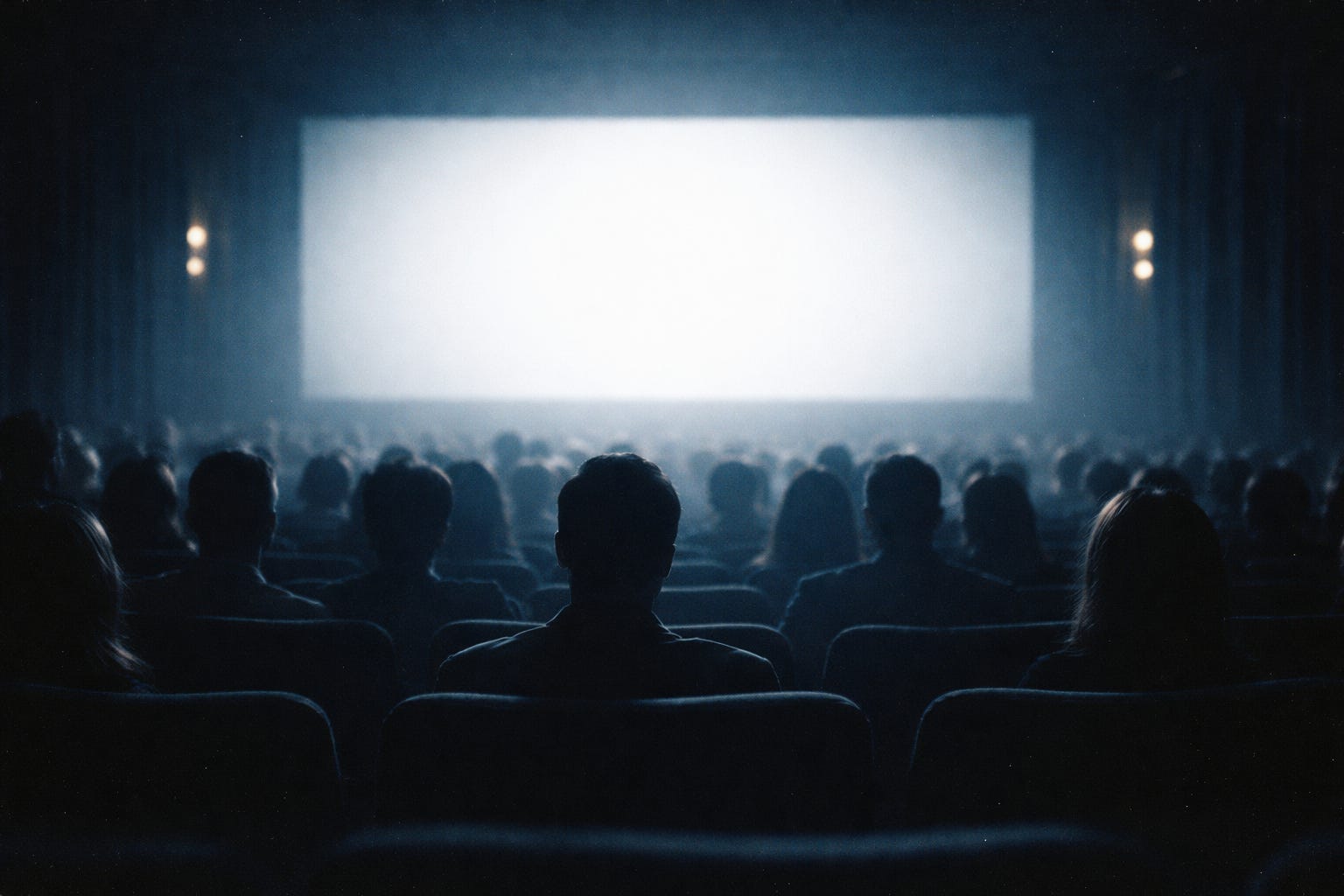
Think of a cinema. You’ve created conditions to pay attention to one thing - the story playing out in front of you. You’re in a dark room, talking is frowned upon, your phone sits untouched in your pocket. The result is full immersion.
When I’m in my work-session, that is the only page that is open. It feels like being thrust into a cockpit where all other distractions are blocked out - at least for the 30 minutes I dedicate to it. It allows me to get into a flow state easier.
Your work-session is the stranger glaring at you when you try to open Instagram.
(Here’s the rabbit hole I’m saving for a future article - the more immersed we are in whatever we’re doing, the more value we derive from that time. Similar to being completely absorbed by learning a new skill that we are interested in, practicing a song on the guitar, or listening to your favourite musician live. Attention divided is attention lost.)
You see the progress
On this very article, I can see the Hansel and Gretel trail I’ve left for myself. If someone looked at this project and dove into each work-session, they’d see my thought process, the paragraphs I decided to remove, the iterations I worked through, the research I drew on to formulate my opinion - from inception to completion.
That trail doesn’t just feel good to look at. It’s receipts.
You create material for reflection
What gets measured gets managed.
Just “completing” the project doesn’t make the next one any easier. Having notes of how you completed it lets you see the shortcuts, the inefficiencies, and - above all - build something that helps future you.
This isn’t just about getting into flow. It’s about getting better at the work over time.
A chef won’t relearn a recipe. They write it down. When they need to whip up that Italian dish again, the note is ready. They don’t go back to an old lady in rural Italy to learn everything from scratch.
Yet here we are. Back in rural Italy. Every. Single. Time.
If you’re tired of being a slave to the pitiful (yet powerful) distractions of life, try the work-session approach. But be warned, it might make your life better - not everybody is ready for it.
Much love,
Dee
Construct by DeeWebsite | YouTube | X / Twitter | Newsletter